
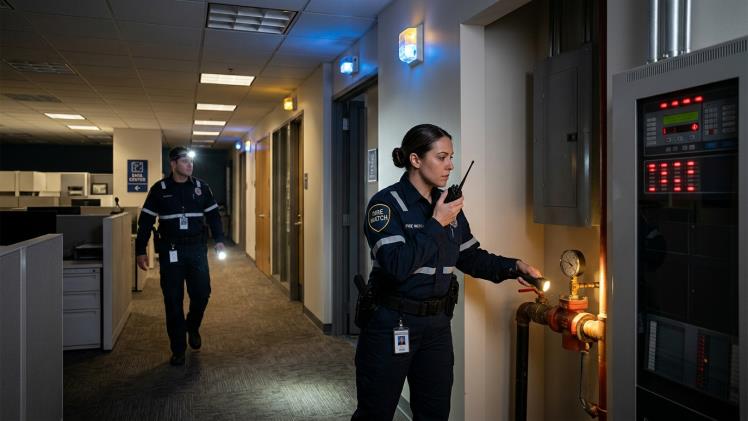
A fire alarm, sprinkler system, or another fire safety setup might stop working for a while. This can be because of work taking place, repairs, parts breaking, or sudden damage. When this happens in a business, the usual ways to keep people and the building safe may not be as good as they should be. A fire watch at the spot helps fill this gap. It puts people trained for the job in the area that is affected. They spot dangers, act fast, and let others know right away if they need to.
Why Immediate Presence Matters During an Impairment
When a protection system is not working, fast fire watch guards watch the areas that may be in danger while things get fixed. NFPA guidance says fire watch guards are trained people. They walk through the places that are affected, look out for any fire risk, and can tell the fire department right away if needed.
The staff does not have to rely only on automated detection. They can see when things change on their own. They can talk about any problems right away. This stops bigger emergencies from happening later.
What Fire Watch Personnel Monitor
A structured patrol does not just mean walking around a building. People need to know the layout well. They have to find weak spots and talk with others about what to do if there is an emergency.
Typical observations include:
- Smoke, flames, strange heat, or the smell of something burning
- Emergency exits that are blocked or hard to use
- A pile of things that can catch fire easily
- Wires or plugs that are not safe
- Jobs that use heat or have things that can lead to a fire
- How quick and simple it is to get firefighting tools
- Changes close to the system that is not working or areas like it
The things you need to do and the way you patrol can change. It depends on the building. It also depends on if there is any damage. The local authority and the fire-safety rules matter too.
How the Response Process Works
| Stage | Fire Watch Focus | Property Benefit |
|---|---|---|
| System failure | Identify affected areas | Establishes the protection gap |
| Initial patrol | Check hazards and access routes | Detects developing problems |
| Continuous monitoring | Maintain regular observation | Reduces unattended risk |
| Emergency discovery | Notify appropriate responders | Supports faster intervention |
| Restoration | Confirm normal conditions with management | Helps close the temporary protection period |
NFPA materials also talk about checking how bad a problem can get. They say it is important to look at more risk, let the right people know, and set up an approved fire watch if needed.
Supporting Safer Commercial Operations
Fire watch staff are important in places where you can’t stop work or fixes take a long. They help by watching closely when the main safety system is down.
They can help keep short-term safety steps working. For example, they can make sure ways to leave are open and see things that may cause fires by mistake. In some cases, the team may have to stop hot work or risky actions when the system is not working.
Maintaining Protection Until Systems Return
A fire watch is not a substitute for a working alarm or safety system. It is a temporary way to keep people safe. The fire watch keeps an eye out until things go back to normal or another approved safety method is used.
For commercial property managers, it is important to get fast fire watch guards when there is a problem with fire safety systems. This way, the guards can watch the place during a risky time. They have set jobs to do, clear ways to talk with others, and quick steps to handle any dangers. The team provides extra safety until the building’s fire system works again.